Grazed Livestock GL
About
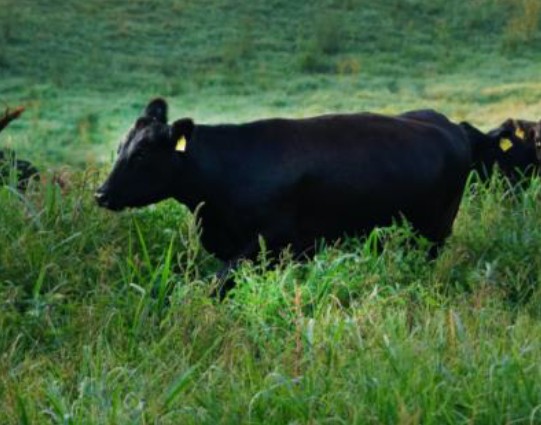
Grazed livestock cropping systems integrate livestock into agricultural landscapes through managed grazing or forage production. In integrated livestock systems, livestock graze perennial pasture or annual forage. Importantly, grazed livestock systems do not include concentrated animal feeding operations (CAFO). Grazing frequency, intensity, and management can vary widely and shape ecosystem responses. When well-managed, integrating grazing animals into agroecosystems promotes multifunctional working lands.
Benefits
Well managed grazing systems:
- Diversify revenue streams
- Promote soil C storage
- Enhance nutrient cycling
- Reduce inputs
Challenges
Depending on management, challenges of grazing systems include:
- Labor demands
- Infrastructure needs
- Reduced cashflow
- Inconsistent environmental impacts
Grazed Livestock Practices
The ACRE team evaluated various grazed livestock practices for climate smartness. Below is a list of practices linked to the ACRE Portal.
- Alley Cropping: Plants crop alleys between tree or shrub rows for diverse yields.
- Composting Facility: Converts organic waste into stable compost through controlled decomposition.
- Conservation Cover: Establishes permanent vegetative cover to protect and restore the land.
- Conservation Crop Rotation: Rotates different crops on the same field each growing season.
- Contour Buffer Strips: Plants perennial vegetation strips along the contour to slow runoff.
- Critical Area Planting: Establishes permanent vegetation on erodible or disturbed land to stabilize soil.
- Field Border: Plants permanent vegetation strips around field edges to reduce erosion and support wildlife.
- Filter Strips: Uses permanent vegetation to filter runoff from fields.
- Fuel Breaks: Uses strips of reduced vegetation to slow wildfire spread and protect property.
- Grassed Waterways: Uses vegetated channels to safely convey runoff and prevent soil erosion.
- Herbaceous Wind Barriers: Plants narrow strips of herbaceous vegetation across fields to reduce wind erosion.
- No-Till: Leaves crop residue on the soil surface to minimize soil disturbance.
- Nutrient Management: Manages fertilizer rate, timing, placement, and source to reduce nutrient loss.
- Pasture and Hay Planting: Establishes perennial forage species for pasture and hay production.
- Prescribed Burning: Uses planned, controlled fire to manage vegetation and reduce risk.
- Prescribed Grazing: Manages timing and intensity of grazing to protect pasture health.
- Reduced Till: Limits soil disturbance during seedbed preparation while retaining protective residue cover.
- Riparian Forest Buffer: Plants trees and grasses along waterways to filter runoff and stabilize banks.
- Roofs and Covers: Covers manure and waste facilities to keep out rain and snow.
- Silvopasture: Integrates trees, forage, and livestock in one managed pasture system.
- Soil Carbon Amendment: Applies organic material to soil to improve health and store carbon.
- Vegetative Barriers: Plants narrow rows of perennial vegetation along contours to slow runoff and erosion.
- Wildlife Habitat Planting: Plants herbaceous vegetation and shrubs to create or restore wildlife habitat.
- Windbreaks: Uses linear tree and shrub plantings to reduce wind speed and protect farms.
Resources
- University of Wisconsin Extension: Grazing Resource Library
- University of Wisconsin-Madison Grassland 2.0: Getting Started with Grazing
- Practical Farmers of Iowa: Livestock and Grazing
- Iowa State University Extension: Grazing and Pasture Systems
- GrassWorks: Wisconsin Grazing Resources
References
- Asprooth, L., Traldi, R., Arbuckle, J., Church, S., Floress, K., Gramig, B., ... & Prokopy, L. S. (2026). A framework for conceptualizing agricultural diversification with a focus on the US Corn Belt. Agricultural Systems, 238, 104826.
- Byrnes, R. C., Eastburn, D. J., Tate, K. W., & Roche, L. M. (2018). A global meta‐analysis of grazing impacts on soil health indicators. Journal of environmental quality, 47(4), 758-765.
- Spratt, E., Jordan, J., Winsten, J., Huff, P., Van Schaik, C., Jewett, J. G., ... & Paine, L. (2021). Accelerating regenerative grazing to tackle farm, environmental, and societal challenges in the upper Midwest. Journal of Soil and Water Conservation, 76(1), 15A-23A.
- Traldi, R., Asprooth, L., M. Usher, E., Floress, K., Arbuckle, J. G., Baskerville, M., ... & Prokopy, L. S. (2024). “Safer to plant corn and beans”? Navigating the challenges and opportunities of agricultural diversification in the US Corn Belt. Agriculture and Human Values, 41(4), 1687-1706.