Nutrient Management (NRCS #590)
Applicable Systems
About
Nutrient management plans strive to improve crop nutrient use efficiency and reduce nutrient loss to the environment. Effective nutrient management should consider all nutrient inputs into a system, including cover crop credits, legume credits, manure additions, inorganic fertilizer, and irrigation1 2. Tools for effective nutrient management include soil testing, in-season tissue sampling, split application of fertilizer, and precision agriculture.
Key aspects and considerations:
- Nutrient management planning includes use of the 4R's.
- Right timing: apply nutrients at the right time to best match crop needs while reducing nutrient loss.
- Right place: apply nutrients at the right place, such as the plant root zone, so plants can easily access available nutrients. To ensure the right placement, the method of application should be considered. Injection and incorporation offer options to reduce nutrient loss that often occurs through broadcast application.
- Right rate: apply nutrients to match crop nutrient needs, and ensure that all forms of nutrients are credited, or accounted for.
- Right source: apply the right form of nutrients by considering plant nutrient needs and soil testing.
- Consider field specific characteristics such as soil type, slope, soil nutrient availability, crop, previous crop, weather and seasonal conditions, distance to surface waters, vulnerable areas, management, and additional site characteristics.
Benefits and Limitations
| ACRE Category | Benefits | Limitations |
|---|---|---|
| Soil Health |
|
|
| Water Management |
|
|
| Nutrient Management |
|
|
| Agricultural Production |
|
|
| Biodiversity and Wildlife |
|
|
| GHG Emission |
| |
| Economics |
|
|
Impact on Agricultural Resilience
- Nutrient management planning increases the ability of cropping systems to remain productive while reducing nutrient losses amid changing precipitation trends. Nutrient management is crucial given increases in extreme rainfall events, which can exacerbate nutrient losses.
- Additionally, water and heat stress can impact plant nutrient uptake. Managing nutrients based on changes in plant demand helps reduce environmental loss and reduce fertilizer costs.
Regional Applicability
- Nutrient management planning is applicable to all regions of the U.S., but is especially applicable in the Midwest, where large-scale agriculture and fertilizer and manure application are common. Corn cropping systems in the Midwest receive some of the highest amounts of fertilizer and are also prone to high nitrogen losses5. Additionally, sandy soil is more vulnerable to nutrient losses than other soil textures, making nutrient management planning especially important in sandy regions of the Midwest.
- Nutrient management plans need to meet requirements which may vary by state, in addition to the NRCS conservation practice standard. While all farms should use a nutrient management plan, nutrient management plans are required for Wisconsin farmers participating in various cost-share and preservation programs, as well as farms with large livestock operations.
Case Studies
- In Illinois, Ifft Yorkshire Farms implemented nutrient management planning on their 1,650 acre corn and soybean farm. After implementing nutrient management planning, the farm was able to reduce phosphorus and potassium application by 20%, resulting in savings of about $20 per acre.
- At Homewood Farms in central Ohio, Dan and Jennifer Lane practice nutrient management, strip-till and cover cropping on their corn and soybean farm. To improve nutrient use efficiency, Dan applies nutrients in multiple banded applications. Describing his management decisions, Dan states: "I believe I figured out a suite of soil health practices that help get my crops started right and early in the spring, while providing efficient feeding of nutrients throughout the growing season."
Resources
- USDA: SMART Nutrient Management
- USDA-NRCS Webinar: Achieving Water Quality Outcomes through Nutrient and Water Management
- University of Wisconsin Extension: Nitrogen Optimization Pilot Program (NOPP)
- University of Wisconsin Nutrient Management software: SnapPlus
- University of Wisconsin Extension: Field Notes Podcast - Nutrient Management Planning and Soil Health
- University of Wisconsin: Nutrient Management Self-Paced Program
- Iowa State University: Nutrient Management Research
- Iowa Nutrient Research and Education Council
- Purdue University: Nutrient Management Online Course
- University of Wisconsin: Nitrate Leaching Calculator
- University of Minnesota and others: Corn Nitrogen Rate Calculator
- American Farmland Trust and USDA-NRCS: Soil Health Case Study Findings
References
- USDA-NRCS (2017). Conservation Practice Standard Document, Nutrient Management, Code 590. https://www.nrcs.usda.gov/sites/default/files/2022-09/Nutrient_Management_590_NHCP_CPS_2017.pdf
- USDA-NRCS (2019). Conservation Practice Overview, Nutrient Management, Code 590. https://www.nrcs.usda.gov/sites/default/files/2022-09/Nutrient_Management_590_NHCP_PO_2018.pdf
- Russell, A. E., Cambardella, C. A., Laird, D. A., Jaynes, D. B., & Meek, D. W. (2009). Nitrogen fertilizer effects on soil carbon balances in Midwestern US agricultural systems. Ecological Applications, 19(5), 1102-1113.
- Van Meter, K. J., Basu, N. B., & Van Cappellen, P. (2017). Two centuries of nitrogen dynamics: Legacy sources and sinks in the Mississippi and Susquehanna River Basins. Global Biogeochemical Cycles, 31(1), 2-23.
- Shrestha, D., Masarik, K., & Kucharik, C. J. (2023). Nitrate losses from Midwest US agroecosystems: Impacts of varied management and precipitation. Journal of Soil and Water Conservation, 78(2), 141-153.
- Campbell, T. A., Booth, E. G., Gratton, C., Jackson, R. D., & Kucharik, C. J. (2022). Agricultural landscape transformation needed to meet water quality goals in the Yahara River watershed of Southern Wisconsin. Ecosystems, 25(3), 507-525.
- Dinnes, D. L., Karlen, D. L., Jaynes, D. B., Kaspar, T. C., Hatfield, J. L., Colvin, T. S., & Cambardella, C. A. (2002). Nitrogen management strategies to reduce nitrate leaching in tile-drained Midwestern soils. Agronomy Journal, 94(1), 153-171.
- Davies, B., Coulter, J. A., & Pagliari, P. H. (2020). Timing and rate of nitrogen fertilization influence maize yield and nitrogen use efficiency. PLOS ONE, 15(5), e0233674.
- Soman, C., Li, D., Wander, M. M., & Kent, A. D. (2017). Long-term fertilizer and crop-rotation treatments differentially affect soil bacterial community structure. Plant and Soil, 413(1), 145-159.
- Gelfand, I., Shcherbak, I., Millar, N., Kravchenko, A. N., & Robertson, G. P. (2016). Long-term nitrous oxide fluxes in annual and perennial agricultural and unmanaged ecosystems in the upper Midwest USA. Global Change Biology, 22(11), 3594-3607.
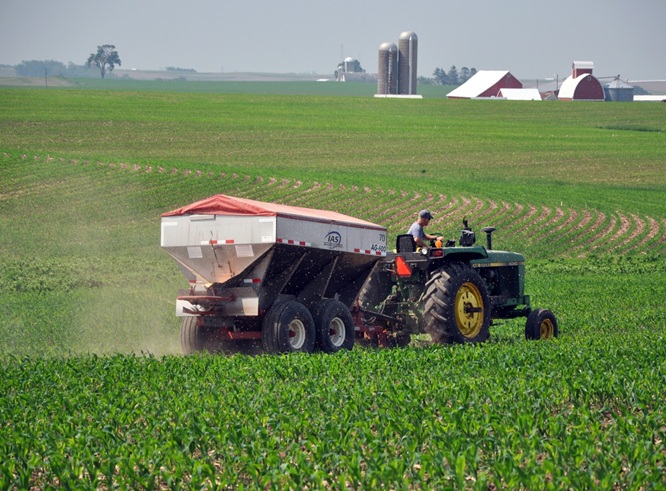
Photo 1: A key component of nutrient management planning is applying fertilizer at the right rate, right place, right time, and with the right source.
Photo courtesy of Iowa NRCS.