Corn & Soybeans CS
About
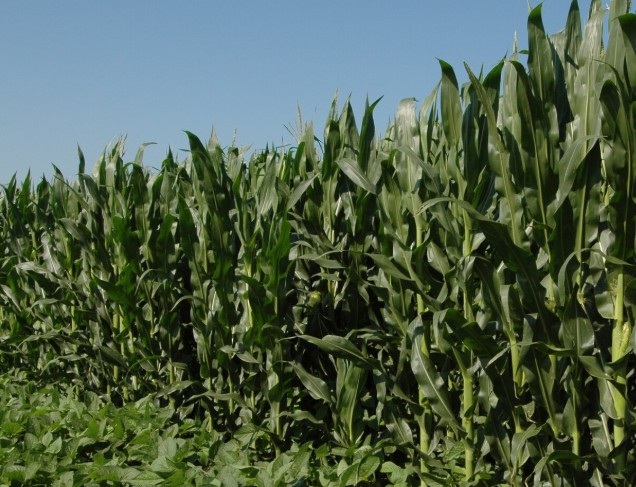
Corn soybean systems currently dominate Midwest agriculture. Supported by crop insurance, subsidies, and existing markets, corn-soybean rotations are productive and profitable across the Midwest. However, annual row cropping systems are resource intensive and often require high rates of nitrogen fertilizer, pesticide application, soil disturbance, and equipment and energy use. Conservation practices help minimize resource concerns.
Benefits
Corn soybean systems benefit from:
- Existing markets
- High crop yields
- Existing equipment and infrastructure
- Crop insurance and subsidy support
Challenges
However, corn soybean systems contribute to:
- Soil loss
- Biodiversity loss
- Water quality degradation
- High resource use
Corn & Soybeans Practices
The ACRE team evaluated various corn and soybeans practices for climate smartness. Below is a list of practices linked to the ACRE Portal.
- Composting Facility: Converts organic waste into stable compost through controlled decomposition.
- Conservation Cover: Establishes permanent vegetative cover to protect and restore the land.
- Conservation Crop Rotation: Rotates different crops on the same field each growing season.
- Contour Buffer Strips: Plants perennial vegetation strips along the contour to slow runoff.
- Cover Crops: Plants a mix of species between cash crops to cover bare soil.
- Critical Area Planting: Establishes permanent vegetation on erodible or disturbed land to stabilize soil.
- Field Border: Plants permanent vegetation strips around field edges to reduce erosion and support wildlife.
- Filter Strips: Uses permanent vegetation to filter runoff from fields.
- Fuel Breaks: Uses strips of reduced vegetation to slow wildfire spread and protect property.
- Grassed Waterways: Uses vegetated channels to safely convey runoff and prevent soil erosion.
- Herbaceous Wind Barriers: Plants narrow strips of herbaceous vegetation across fields to reduce wind erosion.
- Mulching: Applies plant residue or other materials to bare soil to protect and improve it.
- No-Till: Leaves crop residue on the soil surface to minimize soil disturbance.
- Nutrient Management: Manages fertilizer rate, timing, placement, and source to reduce nutrient loss.
- Reduced Till: Limits soil disturbance during seedbed preparation while retaining protective residue cover.
- Riparian Forest Buffer: Plants trees and grasses along waterways to filter runoff and stabilize banks.
- Roofs and Covers: Covers manure and waste facilities to keep out rain and snow.
- Soil Carbon Amendment: Applies organic material to soil to improve health and store carbon.
- Strip Cropping: Alternates erosion-resistant and erosion-prone crops in strips across a field.
- Vegetative Barriers: Plants narrow rows of perennial vegetation along contours to slow runoff and erosion.
- Wildlife Habitat Planting: Plants herbaceous vegetation and shrubs to create or restore wildlife habitat.
- Windbreaks: Uses linear tree and shrub plantings to reduce wind speed and protect farms.
Resources
- USDA: Row Crop Resources
- Iowa State University: Integrated Crop Management
- Iowa Nitrogen Initiative: Nitrogen Fertilizer Application Consultation Tool (N-FACT)
- Climate Adaptation and Mitigation Fellowship (CAMF): Climate Adaptation and Mitigation Planning Tool
References
- Guo, T., Marquart-Pyatt, S. T., & Robertson, G. P. (2023). Using three consecutive years of farmer survey data to identify prevailing conservation practices in four Midwestern US states. Renewable Agriculture and Food Systems, 38, e44.
- Hatfield, J. L., Cruse, R. M., & Tomer, M. D. (2013). Convergence of agricultural intensification and climate change in the Midwestern United States: implications for soil and water conservation. Marine and Freshwater Research, 64(5), 423-435.
- Traldi, R., Asprooth, L., M. Usher, E., Floress, K., Arbuckle, J. G., Baskerville, M., ... & Prokopy, L. S. (2024). “Safer to plant corn and beans”? Navigating the challenges and opportunities of agricultural diversification in the US Corn Belt. Agriculture and Human Values, 41(4), 1687-1706.