Cover Crops (NRCS #340)
Applicable Systems
About
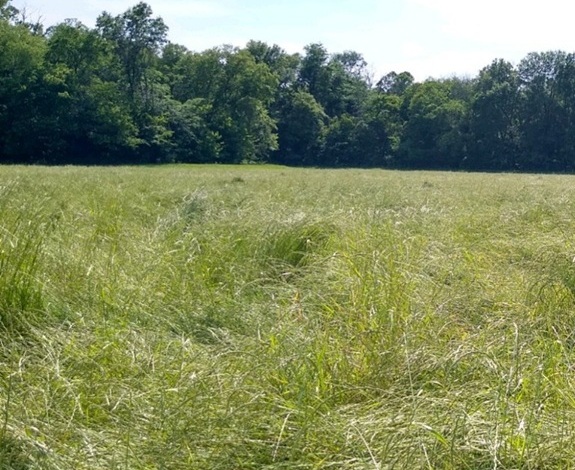
Cover cropping1 is an agricultural practice that involves planting a mixture of legumes, grasses, or another crop on fallow or agricultural land between cash crops to provide ground cover on otherwise barren soil. Cover cropping improves water quality2, soil health and makes agricultural lands more resilient to extreme weather, in addition to providing economic benefits. Common cover crops in the Midwest include grasses, legumes, brassicas, and a few broadleaf species.
Key aspects and considerations:
- To increase benefits, combine different families and species in a mix with variable proportions.
- Plant cover crops in late summer or early fall for adequate growth and establishment.
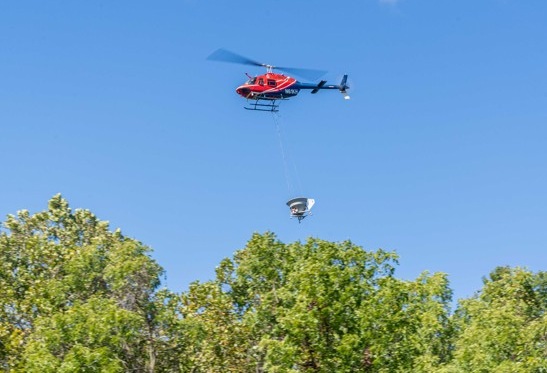
- Consider aerial seeding via plane or drone if the cash crop has not been harvested, or consider broadcast or drill seeding after the cash crop is harvested.
- If using perennials, terminate in early spring via herbicides, crop roller, or tillage.
Benefits and Limitations
| ACRE Category | Benefits | Limitations |
|---|---|---|
| Soil Health |
|
|
| Water Management |
|
|
| Nutrient Management |
|
|
| Agricultural Production |
|
|
| Biodiversity and Wildlife |
|
|
| GHG Emission |
|
|
| Economics |
|
|
Impact on Agricultural Resilience
- Improves soil function and long-term sustainability.
- Residues protect soils from extreme temperatures.
- Increases plant resistance to drought and flooding.
Regional Applicability
- Only 7% of corn and soybean fields plant cover crops in the United States. Texas and the Midwest states of Indiana and Iowa have the largest reported cropland area utilizing cover crops2.
- In 2014, 29 farmers from Iowa joined to discuss the ability of cover crops to reduce the impact of crop agriculture on the environment, particularly regarding erosion and nutrient loss. The discussion is synthesized in Answering Common Producer Questions on Cover Crop Use in Iowa, Iowa State University Extension.
- The study "Cover crop planting practices determine their performance in the U.S. Corn Belt," published in 2022, shows how different cover crop compositions and management systems affect biomass and grain yield4.
Case Studies
- Meet Paul Ehrhardt and Kay Jensen, vegetable growers who have been growing cover crops for more than ten years, and Gary Sommers, who has been growing cash grain with cover crops for twenty years. Both producers are from Wisconsin. "It's just the feeling that you are protecting the soil... adding some organic matter, maybe improving soil tilth a little bit," says Sommers.
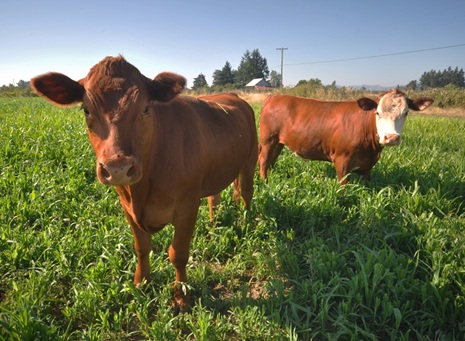
- Learn how practice rotational grazing with cover crops works with Ron Schoepp, Roger Bindl, Darren Yanke, and Ron Bula from Wisconsin. "I'm absolutely going to continue with grazing cover crops. We planted 9 more acres of wheat on the farm, so we'll have around 30 acres to graze each year. It's definitely a no-brainer because of the increased feed, soil health, and animal health. Everyone should be doing it if they have cattle. Get them out of the barnyard," says Schoepp.
- At Thorndyke Farms in north central Illinois, Larry Thorndyke and his family practice cover cropping, strip-till and no-till, and nutrient management on their 2,600 acres of corn and soybeans. By stacking these practices, Thorndyke Farms saw a 129% return on investment. Larry reflects on managing his land for soil health, stating that "what you put in is what you get out."
- Eric Niemeyer of MadMax Farms started cover cropping after witnessing gully erosion and inconsistent crop yields at his farm in central Ohio. Eric describes the power of cover crops as "cover crops are like miracle workers holding the soil in place."
- At Kaderly Ag in Green County, Wisconsin, Jake Kaderly practices cover cropping on his corn, soybean, and winter wheat farm. Jake has witnessed increases in both soil organic matter and crop yield since implementing soil health practices, stating "when I follow winter wheat with a 7-way cover crop, the following corn crop is consistently 20+ bu/ac better than following soybeans."
- Find out why Nicole Vernon was named the Iowa Conservation Woman of the Year (2025) by the Iowa Conservation Partnership, an award to honor women who advance conservation in meaningful ways. "We are borrowing the land from our kids and our grandkids. If I can make sure the land is healthy for my kids, that's a huge gift," said Nicole.
- Learn how Ray Gaesser, a farmer in Adams County, Iowa, maintains and improves his cropland with healthy soil management. "Water infiltration tests show Ray's fields can absorb an inch of water in two to three seconds. Comparable fields with a history of tillage take seven to eight minutes to absorb that much water."
Resources
- Video. NCAT ATTRA: NRCS Practice 340 Cover Crops
- Video. Minnesota NRCS: Interseeding Cover Crops into Corn with Producer Rob Olson and Daughters
- Clean Water Iowa: Cover Crops
- Midwest Cover Crops Council, Cover Crop Recipes: Iowa, Indiana, Illinois.
- University of Wisconsin-Madison, Crops and Soils Division of Extension: Adaptation to Extreme Weather Events with Cover Crops
- Michael Fields Agricultural Institute: Wisconsin Cover Crop Data Network
- USDA National Resources Conservation Service: Iowa Cover Crop Fact Sheets
References
- USDA-NRCS (2024). Conservation Practice Standard Document, Cover Crop, Code 340. https://www.nrcs.usda.gov/sites/default/files/2024-06/340-nhcp-cps-cover-crop-2024.pdf
- Christianson, R., Fox, J., Law, N., & Wong, C. (2021). Effectiveness of Cover Crops for Water Pollutant Reduction from Agricultural Areas. Transactions of the ASABE, 64(3), 1007-1017. https://doi.org/10.13031/trans.14028
- Johnson, F. E., Roth, R. T., Ruffatti, M. D., & Armstrong, S. D. (2024). Cover crop impacts on nitrogen losses and environmental damage cost. Agriculture, Ecosystems & Environment, 363, 108859. https://doi.org/10.1016/j.agee.2023.108859
- Koehler-Cole, K., Elmore, R. W., Blanco-Canqui, H., Francis, C. A., Shapiro, C. A., Proctor, C. A., Ruis, S. J., Irmak, S., & Heeren, D. M. (2023). Cover crop planting practices determine their performance in the U.S. Corn Belt. Agronomy Journal, 115, 526--543. https://doi.org/10.1002/agj2.21247
- USDA-NRCS (2024). Conservation Practice Standard Overview, Cover Crop (Code 340). https://www.nrcs.usda.gov/sites/default/files/2022-09/Cover_Crop_340_Overview.pdf