Roofs and Covers (NRCS #367)
Applicable Systems
About
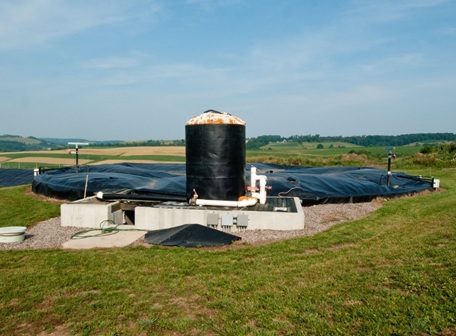
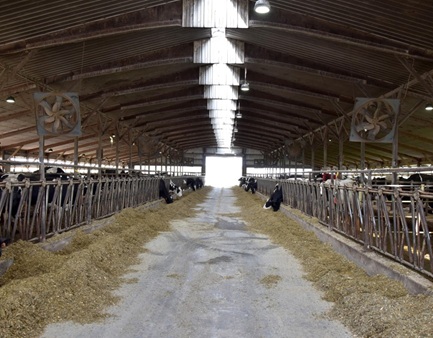
Roofs and Covers1 is an NRCS Conservation Practice that consists of a structure built to cover on-farm facilities that handle waste management, agrichemical, and other potential contaminants.
Key aspects and considerations:
- Cover structures can be rigid, semirigid, or flexible.
- Plan, design, and construction need to attend to laws and regulations.
- Attend to operation and maintenance access, venting, and safety.
- Must resist wind, snow, and heavy rainfall.
- Built to last at least 10 years.
Benefits and Limitations
| ACRE Category | Benefits | Limitations |
|---|---|---|
| Soil Health |
|
|
| Water Management |
|
|
| Nutrient Management |
|
|
| Agricultural Production |
|
|
| Biodiversity and Wildlife |
|
|
| GHG Emission |
|
|
| Economics |
|
|
Impact on Agricultural Resilience
- Improves community resilience in areas where air quality can affect human and animal health.
- Extra revenue from facilities that capture biogas can increase resilience of rural families.
Regional Applicability
- Wisconsin NRCS (2023) published a Functional Review Guidance Roofs and Covers (Code 367) to support agency reviewers in analyzing proposals regarding Risk Category, Snow Exposure Factor, Snow Load Importance Factor, Thermal Factor, and Enclosure Classification.
- The Roofs and Covers (367) Engineering Practice Planning Guide helps plan confinement barns in North Dakota. The practice is an alternative to address surface water contamination and preserve shallow glacial drift aquifers that occur in the region.
Resources
- Video. USDA NRCS: Roofs and Covers
- Video. SmartShelter: Compost Barn Testimonial. Scott & Jan tell the benefits of having an indoor barn system for his cattle.
- Maryland Department of Agriculture, Office of Resource Conservation: Roofs and Covers (Code 367) and Provisions for Heavy Use Area Protection (561), and/or, Roofs and Covers (367)
References
- USDA-NRCS (2023). Conservation Practice Standard Document, Roofs and Covers, Code 367. https://www.nrcs.usda.gov/sites/default/files/2023-04/367-NHCP-CPS-Roofs-and-Covers-2023.pdf
- USDA-NRCS (2023). Conservation Practice Overview, Roofs and Covers (Code 367). https://www.nrcs.usda.gov/sites/default/files/2023-08/367_NHCP_PO_Roof_and_Covers_2023.pdf
- USDA-NRCS (2022). Operation & Maintenance Plan. Roofs and Covers (Code 367). https://efotg.sc.egov.usda.gov/api/CPSFile/34903/367_MN_OM_Roofs_and_Covers_2017