Soil Carbon Amendment (NRCS #336)
Applicable Systems
About
Soil carbon amendment1 is any organic material, derived from plants or animal byproducts, that is applied to the soil to enhance physical, chemical, and/or biological characteristics in croplands, pastures, or rangelands. Soil carbon amendments include animal residue, manure, compost, biochar, mulch, biosolids, and sawdust. The NRCS also recognizes biostimulants as soil amendments when they are applied to soil, improve soil properties, and contribute to soil organic matter and carbon inputs2.
Key aspects and considerations:
- Complete soil and carbon amendment analysis prior to application.
- Use compost produced in controlled aerobic and biological decompositions, and tested for several parameters and quality assurance.
- Adjust nutrient and pest management for the specific amendment type and purpose.
- Test soil at least three years after application to monitor long-term impacts.
- Ensure products comply with federal, state, and local laws and regulations.
- Preferably use mature composts to avoid GHG emissions.
- Consider challenges associated with hauling bulky materials and spreading large volumes.
- Adjust for evolving knowledge on optimal rates, material types, and long-term impacts.
Benefits and Limitations
| ACRE Category | Benefits | Limitations |
|---|---|---|
| Soil Health |
|
|
| Water Management |
|
|
| Nutrient Management |
|
|
| Agricultural Production |
|
|
| Biodiversity and Wildlife |
|
|
| GHG Emission |
|
|
| Economics |
|
|
Impact on Agricultural Resilience
- Promotes resilience to drought, heat waves, or heavy rains.
- Reduces external water and fertilizer needs.
- Promotes plant growth and aboveground biomass, thus enhancing carbon assimilation via photosynthesis3.
Regional Applicability
- A research team at University of Nebraska--Lincoln, in collaboration with the City of Lincoln and Oregon Biochar Solutions, conducted a 16-acre field trial using biochar and biosolids to support the biochar industry in the Midwest.
- University of Minnesota Extension provides some guidelines for manure management while reducing air and water quality issues.
- Natural mulches are widely applied as soil amendment to a range of cropping systems, including those that are cultivated in the Midwest, small farms and gardens.
Case Studies
- Meet Janaki and his wife Annie Dugan, who operate a certified organic farm in Wrenshall, MN. They manage a winter rye cut-and-carry mulch system for several crops. "The better we can treat the soil, the healthier it is, the better crops do, the more resilient they are," Janaki said.
- Nick Cuchetti is a family farmer in Luebbering, MO. He pours the biochar into soil beds where he plants vegetables to sell at a farmer's market. "You put it in soil, it's just there. You can just forget about it. It's gone," he said.
Resources
- Video. Sustainable Agriculture Research and Education (SARE): Biochar and Blueberries with Richard Mareske
- Video. USDA Forest Service: Creation and Distribution of Biochar on the Landscape
- Video. American Farmland Trust: Biochar Enhanced Fertilizers
- Colorado State University Extension: Soil Amendments
- US Composting Council: Compost & Soil Improvement: Tools for Climate Resilient Landscapes
- American Farmland Trust: NRCS Biochar Funding Quick Guide for US Producers
- USDA California Climate Hub: Climate-Smart Agriculture: Soil Health & Carbon Farming
- USDA California Climate Hub: Climate-Smart Agriculture: Compost Amendments
- USDA California Climate Hub: Climate-Smart Agriculture: Biochar Amendments
- USDA Forest Service: Black to the Future: Biochar and Forests
References
- USDA-NRCS (2022). Soil Carbon Amendment Standard Document, Code 336. https://www.nrcs.usda.gov/sites/default/files/2022-11/336-NHCP-CPS-Soil-Carbon-Amendment-2022.pdf
- Rubin, R., Oldfield, E., Lavallee, J., Griffin, T., Mayers, B., & Sanderman, J. (2023). Climate mitigation through soil amendments: quantification, evidence and uncertainty. Carbon Management, 14(1), 2217785. https://doi.org/10.1080/17583004.2023.2217785
- Enebe, M. C., Ray, R. L., & Griffin, R. W. (2025). Carbon sequestration and soil responses to soil amendments - A review. Journal of Hazardous Materials Advances, 18, 100714. https://doi.org/10.1016/j.hazadv.2025.100714
- USDA-NRCS (2022). Soil Carbon Amendment Conservation Practice Overview (Code 336). https://www.nrcs.usda.gov/sites/default/files/2022-11/336-NHCP-PO-Soil-Carbon-Amendment-2022.pdf
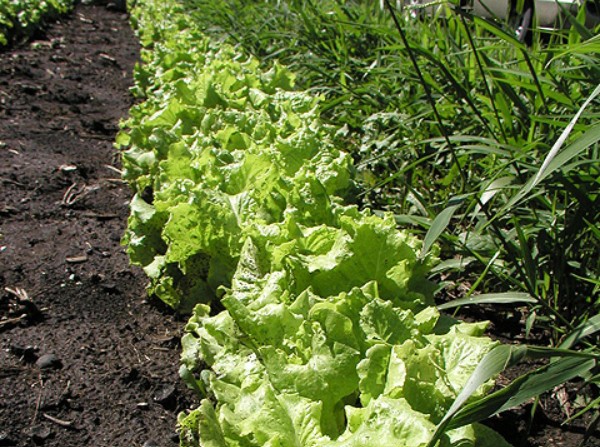
Photo 1: Biochar is applied to lettuce in a Minnesota field.
Courtesy of USDA-ARS, Photo by Amanda Bidwell.
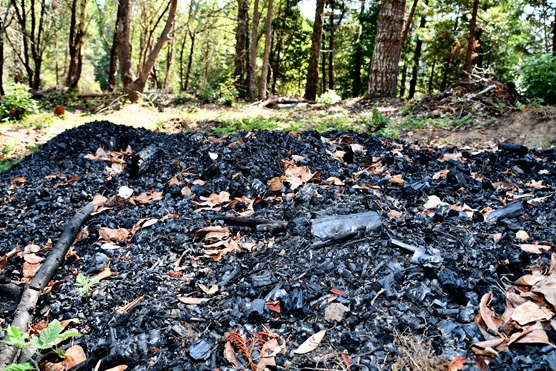
Photo 2: In Oregon, a landowner creates biochar from tree debris and applies it to the landscape.
Oregon NRCS photo by Tracy Robillard. Attribution: "biochar pile in forest" by NRCS Oregon, CC BY-ND 2.0.