Perennial Crops PC
About
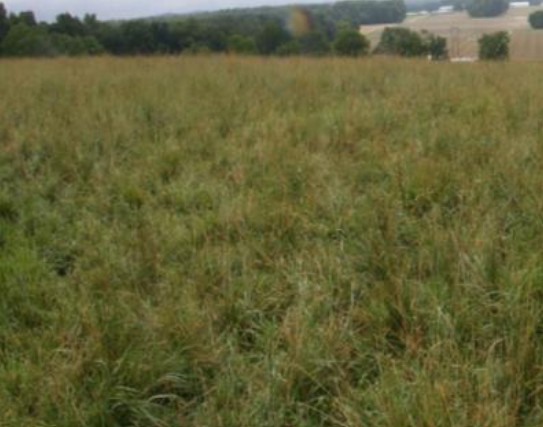
Perennial cropping systems incorporate permanent vegetation into the landscape. Perennial crops include alfalfa, perennial grasses, biofuel crops, and various legumes and forbs, and may be grown as pasture or permanent crop stands. Importantly, perennial crops do not need to be replanted every year and grow for multiple years. In comparison to many annual cropping systems, incorporating perennials increases on-farm diversification and multifunctionality.
Benefits
Well managed perennial cropping systems:
- Enhance soil health
- Reduce inputs
- Support biodiversity
- Improve water quality
Challenges
However, challenges of perennial cropping systems include:
- Underdeveloped markets
- Lack of structural support.
- Wildlife damage
- Longterm investment
Perennial Crops Practices
The ACRE team evaluated various perrenial crops practices for climate smartness. Below is a list of practices linked to the ACRE Portal.
- Alley Cropping: Plants crop alleys between tree or shrub rows for diverse yields.
- Composting Facility: Converts organic waste into stable compost through controlled decomposition.
- Conservation Cover: Establishes permanent vegetative cover to protect and restore the land.
- Contour Buffer Strips: Plants perennial vegetation strips along the contour to slow runoff.
- Critical Area Planting: Establishes permanent vegetation on erodible or disturbed land to stabilize soil.
- Field Border: Plants permanent vegetation strips around field edges to reduce erosion and support wildlife.
- Forest Farming: Grows understory crops beneath a managed forest canopy for income.
- Forest Stand Improvement: Alters forest stand composition, structure, or density to improve forest health.
- Fuel Breaks: Uses strips of reduced vegetation to slow wildfire spread and protect property.
- Grassed Waterways: Uses vegetated channels to safely convey runoff and prevent soil erosion.
- Mulching: Applies plant residue or other materials to bare soil to protect and improve it.
- No-Till: Leaves crop residue on the soil surface to minimize soil disturbance.
- Nutrient Management: Manages fertilizer rate, timing, placement, and source to reduce nutrient loss.
- Prescribed Burning: Uses planned, controlled fire to manage vegetation and reduce risk.
- Reduced Till: Limits soil disturbance during seedbed preparation while retaining protective residue cover.
- Riparian Forest Buffer: Plants trees and grasses along waterways to filter runoff and stabilize banks.
- Silvopasture: Integrates trees, forage, and livestock in one managed pasture system.
- Soil Carbon Amendment: Applies organic material to soil to improve health and store carbon.
- Strip Cropping: Alternates erosion-resistant and erosion-prone crops in strips across a field.
- Tree/Shrub Establishment: Establishes woody plants through seeding, seedlings, cuttings, or natural regeneration.
- Vegetative Barriers: Plants narrow rows of perennial vegetation along contours to slow runoff and erosion.
- Wildlife Habitat Planting: Plants herbaceous vegetation and shrubs to create or restore wildlife habitat.
- Windbreaks: Uses linear tree and shrub plantings to reduce wind speed and protect farms.
Resources
- The Land Institute: Discover How Perennial Agriculture is Transforming our Food Future
- University of Wisconsin Extension: Forage Production and Management
- University of Wisconsin Extension: Emerging Crops
- American Farmland Trust: Midwest Perennial Bioenergy Crop Diversification Project
- Center for Integrated Agricultural Systems: Perennial Food Crops
References
- Asbjornsen, H., Hernandez-Santana, V., Liebman, M., Bayala, J., Chen, J., Helmers, M., ... & Schulte, L. A. (2014). Targeting perennial vegetation in agricultural landscapes for enhancing ecosystem services. Renewable Agriculture and Food Systems, 29(2), 101-125.
- Asprooth, L., Traldi, R., Arbuckle, J., Church, S., Floress, K., Gramig, B., ... & Prokopy, L. S. (2026). A framework for conceptualizing agricultural diversification with a focus on the US Corn Belt. Agricultural Systems, 238, 104826.
- Kreitzman, M., Eyster, H., Mitchell, M., Czajewska, A., Keeley, K., Smukler, S., ... & Chan, K. M. (2022). Woody perennial polycultures in the US Midwest enhance biodiversity and ecosystem functions. Ecosphere, 13(1), e03890.
- Porter, P. A., Mitchell, R. B., & Moore, K. J. (2015). Reducing hypoxia in the Gulf of Mexico: Reimagining a more resilient agricultural landscape in the Mississippi River Watershed. Journal of Soil and Water Conservation, 70(3), 63A-68A.