Forest Stand Improvement (NRCS #666)
Applicable Systems
About
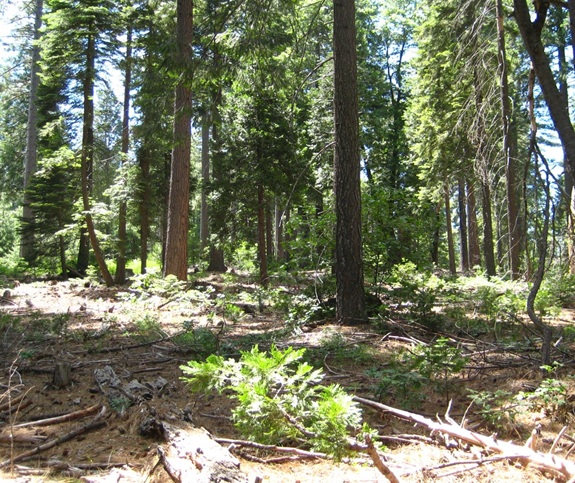
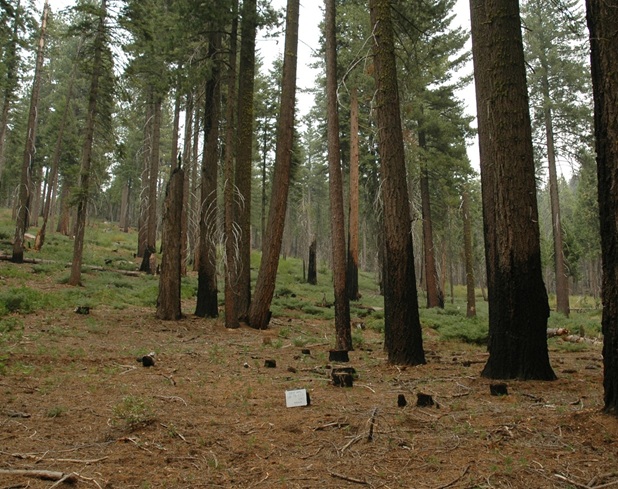
Forest stand improvement, sometimes referred to as timber stand improvement, is the practice of altering the species composition, structure, or density of a tree stand to enhance its function1 2. Forest stand improvement uses silvicultural techniques, such as thinning, harvesting, planting, and prescribed burning to meet desired goals while considering site characteristics. Additionally, land managers should identify crop trees, or the trees intended for future harvest, and choose management strategies that improve the selected crop trees. Generally, forest stand improvement techniques promote a healthy, productive, and biodiverse forest system.
Key aspects and considerations:
- Identify desired species.
- Determine optimal spacing and density.
- Remove invasive species.
- Minimize unintended negative impacts.
Benefits and Limitations
| ACRE Category | Benefits | Limitations |
|---|---|---|
| Soil Health |
|
|
| Water Management |
|
|
| Nutrient Management |
|
|
| Agricultural Production |
|
|
| Biodiversity and Wildlife |
|
|
| GHG Emission |
| |
| Economics |
|
|
Impact on Agricultural Resilience
- In the Midwest, forest health is impacted by changes in temperature, precipitation, pests, and invasive species7. Northern and boreal forests in the region are likely to be most impacted, as warming temperatures are likely to decrease suitable habitat8.
- As climate change continues, forest management must consider and respond to these stressors. By implementing forest stand improvement, land managers can reduce the vulnerability of forests to changing environmental conditions. For instance, selecting species that are adapted to higher temperatures and extreme rainfall can increase forest resilience. Additionally, forest stand improvement can increase drought tolerance through improved species selection, thinning, and management.
Regional Applicability
- Forest stand improvement can be implemented anywhere there is a forest, woodland, or stand of trees. In the Midwestern U.S., boreal forests are common in the north, while oak-hickory forests dominate in portions of the Ozarks. Forests and forest products contribute substantially to the Midwestern economy; in Wisconsin alone, the industry was found to contribute $27 billion to the economy.
- While forest cover is most prominent in the northeast U.S., forest stand improvement can be practiced across the Midwest. For example, recent research in the White River Basin of Indiana suggests forest stand improvement in central hardwood forests can improve timber productivity and increase stand value, though is most profitable with voluntary incentive programs9.
- Midwest forests will face increased vulnerability due to rising growing-season temperatures, increased frequency of drought, and reduced winter snowpack, a result of ongoing climate change. Forest stand improvement can help land managers effectively manage their land in light of these environmental changes.
- According to a USDA report, in 2020, tree release and weed treatments, precommercial thinning, pruning, and fertilization cost $225, $244, $116, and $9 per acre, respectively.
Case Studies
- In Virginia, a demonstration woodlot was thinned, with a focus on harvesting over-mature sawtimber and reducing crown competition. The demonstration site highlighted barriers to thinning, as it was challenging to find a timber operator interested in the job due to limited acres.
Resources
- University of Tennessee Extension: Forest Stand Improvement in the Eastern U.S.
- Missouri Department of Conservation: Missouri Timber Stand Improvement
- Wisconsin Department of Natural Resources (DNR): Silviculture Handbook: Intermediate Treatments
- University of Minnesota Extension: Thinning and Woodland Stand Improvement
- Minnesota Board of Water and Soil Resources: Forest Stand Improvement Training Series
- University of Minnesota Extension: Minnesota Climate Ready Trees
- Iowa Department of Natural Resources (DNR): Forestry Landowner Assistance
- Illinois Department of Natural Resources (DNR): Forest Stand Improvement
- University of Illinois Extension: Forestry Resources
- Indiana Department of Natural Resources (DNR): Forest Resources in Indiana
- USDA-FS: USDA Tree Atlas
- USDA-FS: Forest Management
- Video. USDA-NRCS: Forest Stand Improvement
- USDA-FS and Northern Institute of Applied Climate Science (NIACS): Forest Carbon Management Menu
- USDA-FS: Silvicultural Guide for Northern Hardwoods in the Northeast
- USDA-NRCS: Forest Management and Forest Stand Improvement Fact Sheet
- USDA-NRCS: Forest Stand Improvement Overview
- USDA-NRCS: Forest Stand Improvement Standard
References
- USDA-NRCS (2022). Conservation Practice Standard Document, Forest Stand Improvement, Code 666. https://www.nrcs.usda.gov/sites/default/files/2022-11/666-NHCP-CPS-Forest-Stand-Improvement-2022.pdf
- USDA-NRCS (2022). Conservation Practice Overview, Forest Stand Improvement, Code 666. https://www.nrcs.usda.gov/sites/default/files/2022-11/666-NHCP-PO-Forest-Stand-Improvement-2022.pdf
- Zhang, H., Liu, S., Yu, J., Li, J., Shangguan, Z., & Deng, L. (2024). Thinning increases forest ecosystem carbon stocks. Forest Ecology and Management, 555, 121702.
- D'Amato, A. W., Bradford, J. B., Fraver, S., & Palik, B. J. (2013). Effects of thinning on drought vulnerability and climate response in north temperate forest ecosystems. Ecological Applications, 23(8), 1735-1742.
- Dieler, J., Uhl, E., Biber, P., Müller, J., Rötzer, T., & Pretzsch, H. (2017). Effect of forest stand management on species composition, structural diversity, and productivity in the temperate zone of Europe. European Journal of Forest Research, 136(4), 739-766.
- Janowiak, M., Connelly, W. J., Dante-Wood, K., Domke, G. M., Giardina, C., Kayler, Z., et al. (2017). Considering forest and grassland carbon in land management. General Technical Report, Washington Office, 95.
- Ontl, T. A., Janowiak, M. K., Swanston, C. W., Daley, J., Handler, S., Cornett, M., et al. (2020). Forest management for carbon sequestration and climate adaptation. Journal of Forestry, 118(1), 86-101.
- Swanston, C., Brandt, L. A., Janowiak, M. K., Handler, S. D., Butler-Leopold, P., Iverson, L., et al. (2018). Vulnerability of forests of the Midwest and Northeast United States to climate change. Climatic Change, 146(1), 103-116.
- Wang, Y., Ma, W., Farlee, L. D., Jackson, E. A., Shao, G., Ochuodho, T., et al. (2021). Assessing the benefits and economic feasibility of stand improvement for central hardwood forests. Forest Science, 67(3), 297-311.