Mulching (NRCS #484)
Applicable Systems
About
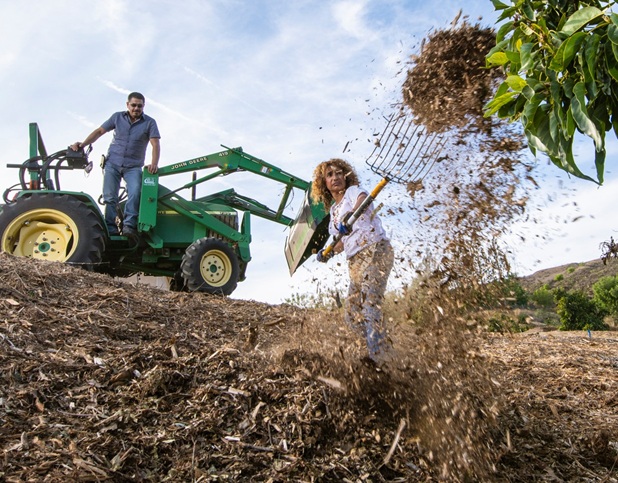
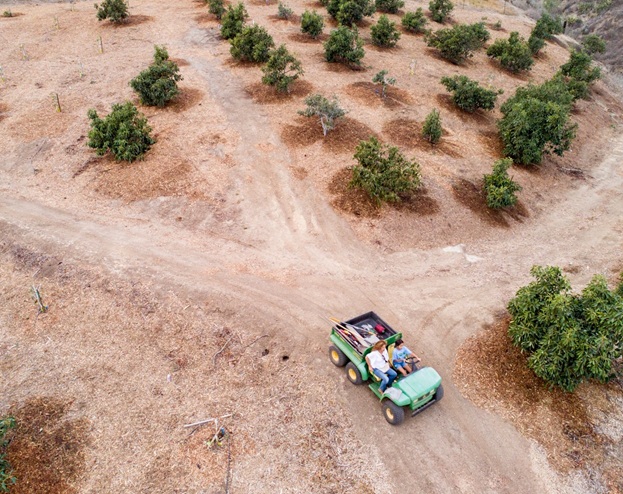
Mulching1 is the practice of applying plant residues or other natural or synthetic materials to bare, exposed soil surfaces. In most cases, mulch consists of grain straw residue, but common natural mulch materials also include wood chips, leaves, straw residue, compost, and wool. Mulching is considered a best management practice (BMP) for soil and water quality protection.
Key aspects and considerations:
- Apply mulch material evenly at a minimum of 70% ground cover.
- Use adequate methods for anchoring mulch, especially in steep areas.
- Use irrigation to help bind mulch and establish vegetative cover before fall rains.
- Avoid excessively thick, tightly packed, and low permeable mulches.
- In concentrated flow areas, apply mulch with higher C:N ratio to avoid negative water quality impacts.
- Use organic mulch (6-8 Mg ha⁻¹) to regulate soil and water loss2.
Benefits and Limitations
| ACRE Category | Benefits | Limitations |
|---|---|---|
| Soil Health |
|
|
| Water Management |
|
|
| Nutrient Management |
|
|
| Agricultural Production |
|
|
| Biodiversity and Wildlife |
|
|
| GHG Emission |
|
|
| Economics |
|
|
Impact on Agricultural Resilience
- By regulating soil temperature, mulching protects roots from extreme temperature fluctuations and enhances plant resilience.
- Reduces evapotranspiration and increases plant resilience during dry periods.
Regional Applicability
- Mulching can be applied to a range of cropping systems, including those in the Midwest, including small farms and gardens.
- Mulch can be especially important in the central Midwest, where soil and crops are prone to freeze-thaw cycles. Additionally, mulch can help protect crops from cold stress, which is especially important for Christmas tree farms and other perennial crops grown in the Upper Midwest, which must survive winter temperatures.
Case Studies
- Get to know Janaki and his wife Annie Dugan, who operate a certified organic fruits and vegetables farm in Wrenshall, MN. They work in a winter rye cut-and-carry mulch system for several crops. "The better we can treat the soil, the healthier it is, the better crops do, the more resilient they are. Whatever I can do to reduce tillage operations, especially when it's too wet or too cold here, that's a good thing. It makes our lives easier," Janaki said.
- Tom Rogers and his brother from Rogers Farm, an almond farm near Madera, CA, began applying compost and mulching his orchard prunings in 2009. Since then, he has seen a 10% increase in yield annually. Tom reflects on the decision to implement soil health practices: "Take care of the soil and it will take care of the trees."
Resources
- Video. USDA-NRCS: Mulching
- Video. University of Nebraska Extension, Backyard Farmer: Mulch Types & Usage
- Washington State University, Small Fruit Horticulture Research and Extension Program: Mulch Matters Podcast
- Sustainable Agriculture Research and Education (SARE): Towards Resilient and Sustainable Grape Production in the North Central Region with Renewable Mulching Systems
- University of Wisconsin-Madison, Wisconsin Horticulture Division and Extension: Mulches for Home Gardens and Plantings
- Iowa State University Extension, Sustainable Urban Landscapes: Using Mulches in Managed Landscapes
- Iowa State University Extension and Outreach: Organic Mulches
- Michigan State University, MSU Extension: Organic Mulching for Weed Control and Mitigating Cold Stress in Christmas Tree Production
References
- USDA-NRCS (2017). Conservation Practice Standard Document, Mulching, Code 484. https://www.nrcs.usda.gov/sites/default/files/2022-09/Mulching_CPS_484_Oct_2017.pdf
- Li, R., Li, Q., & Pan, L. (2020). Review of organic mulching effects on soil and water loss. Archives of Agronomy and Soil Science, 67(1), 136-151. https://doi.org/10.1080/03650340.2020.1718111
- Kohnke, H., & Werkhoven, C. H. (1963). Soil temperature and soil freezing as affected by an organic mulch. Soil Science Society of America Journal, 27(1), 13-17. https://doi.org/10.2136/sssaj1963.03615995002700010010x
- USDA-NRCS (2017). Conservation Practice Standard Overview, Mulching (Code 484). https://www.nrcs.usda.gov/sites/default/files/2022-09/Mulching_484_Overview_Oct_2017.pdf