Critical Area Planting (NRCS #342)
Applicable Systems
About
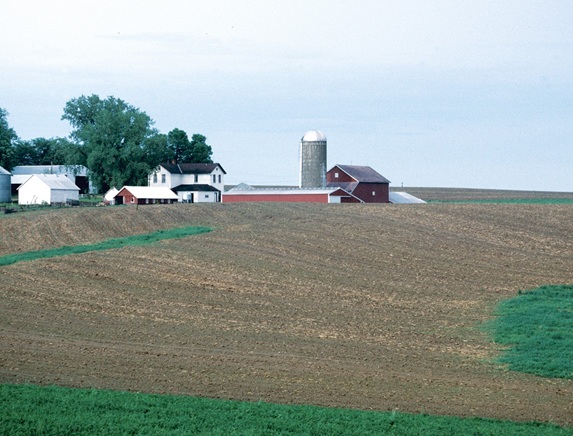
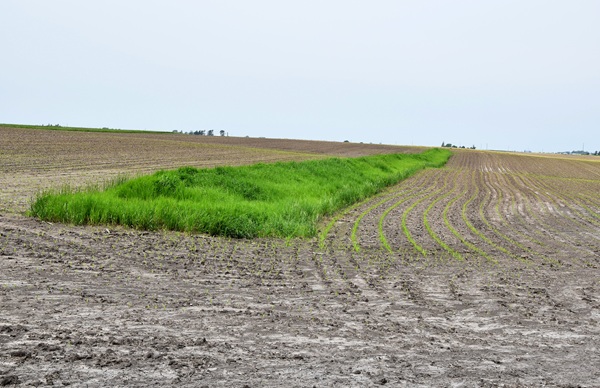
Critical area plantings establish permanent vegetation on land susceptible to erosion, or on sites with physical, chemical, or biological properties that hinder vegetation establishment. The main goals of critical area plantings are to stabilize land with high rates of erosion, stream and channel banks, and sand dunes or riparian zones1 2. Critical area plantings are most needed on landscapes experiencing high levels of disturbance, either through natural causes or due to human activities. More generally, critical area plantings stabilize the soil, reduce erosion, improve water quality, enhance public safety, and protect infrastructure.
Key aspects and considerations:
- Prepare the site through a site investigation, clearing unwanted plants or weeds, and properly creating a seedbed.
- Select species compatible with site characteristics and the regional climate.
- Ensure planting method aligns with site conditions.
Benefits and Limitations
| ACRE Category | Benefits | Limitations |
|---|---|---|
| Soil Health |
| |
| Water Management |
|
|
| Nutrient Management |
|
|
| Agricultural Production |
|
|
| Biodiversity and Wildlife |
|
|
| GHG Emission |
|
|
| Economics |
|
|
Impact on Agricultural Resilience
- Adding vegetation to disturbed areas or stream banks can increase the ability of the landscape to respond to extreme rainfall and floods. Specifically, trees and shrubs reduce the flow and velocity of water, while also increasing infiltration compared to bare soil. Adding vegetation to areas vulnerable to flooding is a strategy to reduce the risk of flooding. As extreme rainfall events become more common and severe in the Midwest, proactive management to reduce flood vulnerability is crucial.
Regional Applicability
- Critical area plantings are relevant to regions across the United States but are particularly important to soils that have experienced large disturbances or are highly erodible. Highly disturbed areas can include abandoned mined lands, urban restoration sites, construction zones, and areas impacted by floods, hurricanes, tornadoes, or wildfires. In the Midwest, sand dunes surrounding Lake Michigan are an example of an area where critical area plantings may be prioritized, in addition to areas vulnerable to flooding.
Case Studies
- In Madison, WI, efforts are underway to restore Lower Badger Mill Creek. Historically, this area was protected by wetlands but has since been drained for agriculture. As part of the restoration, ecologists are planting thousands of trees and shrubs, with an aim of reducing the flow of water, and making the area less prone to flooding.
- In southcentral Wisconsin, the former Badger Army Ammunition Plant has undergone remediation, including the planting of native vegetation on the contaminated land. Currently, the land is managed by the USDA, Wisconsin Department of Natural Resources (DNR), and the Ho-Chunk nation.
Resources
- Butler, Ohio Soil & Water Conservation District: Critical Area Plantings
- USDA-NRCS: Iowa Critical Area Planting Scenarios
- Wisconsin Department of Natural Resources (DNR): Seeding for Construction Site Erosion Control (1059)
- Michigan Department of Environment, Great Lakes, and Energy: Sand Dune Stabilization Best Management Practices
- Michigan Department of Environment, Great Lakes, and Energy: Frequently Asked Questions: Dune Restoration
- National Centers for Coastal Ocean Science: If You Build It, Is It Worth It? The Value of Restoring Coastal Sand Dunes and Wetlands
- Video. USDA-NRCS: Critical Area Planting
References
- USDA-NRCS (2016). Conservation Practice Standard Document, Critical Area Planting, Code 342. https://www.nrcs.usda.gov/sites/default/files/2022-09/Critical_Area_Planting_342_CPS.pdf
- USDA-NRCS (2016). Conservation Practice Overview, Critical Area Planting, Code 342. https://www.nrcs.usda.gov/sites/default/files/2022-09/Critical_Area_Planting_342_Overview_Sep_2016.pdf
- Simon, A., & Collison, A. J. (2002). Quantifying the mechanical and hydrologic effects of riparian vegetation on streambank stability. Earth Surface Processes and Landforms, 27(5), 527-546.
- Salon, P. A., & Miller, C. F. (2012). A Guide to Conservation Plantings on Critical Areas for the Northeast.
- Uniyal, B., Jha, M. K., Verma, A. K., & Anebagilu, P. K. (2020). Identification of critical areas and evaluation of best management practices using SWAT for sustainable watershed management. Science of the Total Environment, 744, 140737.
- Schilling, K. E., Mount, J., Suttles, K. M., McLellan, E. L., Gassman, P. W., White, M. J., & Arnold, J. G. (2023). An approach for prioritizing natural infrastructure practices to mitigate flood and nitrate risks in the Mississippi-Atchafalaya River Basin. Land, 12(2), 276.
- Schröder, R., & Kiehl, K. (2020). Ecological restoration of an urban demolition site through introduction of native forb species. Urban Forestry & Urban Greening, 47, 126509.
- Swan, A., Oldfield, E., & Toureene, C. (2025). Perennial Plantings and Climate Outcomes: Literature Review and Technical Guidance. Technical Advisory Network for Climate Smart Agricultural Practices. https://doi.org/10.5281/zenodo.15777153