Fuel Breaks (NRCS #383)
Applicable Systems
About
Fuel breaks are strips or blocks of land with reduced or modified vegetation that limit the spread of fire. Fuel breaks should be designed to minimize risk of damage to any nearby buildings or resources, and fuel break length and width should be long and wide enough to contain the fire1 2. Fuel break establishment costs depend on the type of materials being treated, the size of the fuel break, and the methods used in implementing and managing fuel breaks.
Key aspects and considerations:
- Integrate natural or existing features (lakes, streams, railroads) to increase fuel break efficiency.
- Remove ladder fuels.
- Thin overstory canopy.
- Treat or remove slash.
- Manage height, density and composition of grasses and forbs.
- Regularly manage and inspect fuel breaks to avoid excess litter, invasive plants, and downed trees.
- Ensure firefighters have access to the fuel break for greatest success3.
Benefits and Limitations
| ACRE Category | Benefits | Limitations |
|---|---|---|
| Soil Health |
|
|
| Water Management |
|
|
| Nutrient Management |
|
|
| Agricultural Production |
|
|
| Biodiversity and Wildlife |
|
|
| GHG Emission |
|
|
| Economics |
|
|
Impact on Agricultural Resilience
- As fire season increases in both frequency and length, fuel breaks offer a strategy for adapting and mitigating risk7. In the Midwest, increases in extreme heat and drought leave the region more susceptible to wildfire risk.
Regional Applicability
- Fuel breaks are applicable across any landscape or region with a goal of stopping or slowing wildfire spread. Fuel breaks are more prevalent in the western U.S., where wildfires are more common and severe. However, over the past few decades, fuel break adoption has become more widespread in northern boreal forests7.
Resources
- Video. University of California: Promoting Wildfire Resilience on your Forestland with Fuel Breaks
- USDA-FS: Fuels Management
- Colorado State: Fuelbreak Guidelines for Forested Subdivisions and Communities
- USDA-NRCS: Fuel and Fire Breaks: Small Scale Solutions for your Farm
- USDA-NRCS Technical Note: Fuel Breaks to Reduce Large Wildfire Impacts in Sagebrush Ecosystems
- USDA Climate Hubs: Establishing Natural or Artificial Fuel Breaks to Slow the Spread of Catastrophic Fire
- United States Geological Survey (USGS): Fuel Break Science in the Great Basin
- National Oceanic and Atmospheric Administration (NOAA): Wildfire Climate Connection
- National Aeronautics and Space Administration (NASA): Wildfires and Climate Change
- Federal Emergency Management Agency (FEMA): Creating Fuel Breaks as a Mitigation Measure in Combatting Wildfire Risks
References
- USDA-NRCS (2022). Conservation Practice Standard Document, Fuel Break, Code 383. https://www.nrcs.usda.gov/sites/default/files/2022-11/383-NHCP-CPS-Fuel-Break-2021.pdf
- USDA-NRCS (2022). Conservation Practice Overview, Fuel Break, Code 383. https://www.nrcs.usda.gov/sites/default/files/2022-11/383-NHCP-PO-Fuel-Break-2022.pdf
- Syphard, A. D., Keeley, J. E., & Brennan, T. J. (2011). Factors affecting fuel break effectiveness in the control of large fires on the Los Padres National Forest, California. International Journal of Wildland Fire, 20(6), 764-775.
- Shinneman, D. J., Germino, M. J., Pilliod, D. S., Aldridge, C. L., Vaillant, N. M., & Coates, P. S. (2019). The ecological uncertainty of wildfire fuel breaks: examples from the sagebrush steppe. Frontiers in Ecology and the Environment, 17(5), 279-288.
- Keeley, J. E. (2006). Fire management impacts on invasive plants in the western United States. Conservation Biology, 20(2), 375-384.
- Ontl, T. A., Janowiak, M. K., Swanston, C. W., Daley, J., Handler, S., Cornett, M., et al. (2020). Forest management for carbon sequestration and climate adaptation. Journal of Forestry, 118(1), 86-101.
- Link, N. T., Johnstone, J. F., Walker, X. J., Amundsen, F., Berrios, H. K., Bibeau, L., et al. (2026). Mitigating increasing wildfire risk through fuel break innovations. iScience, 29(1).
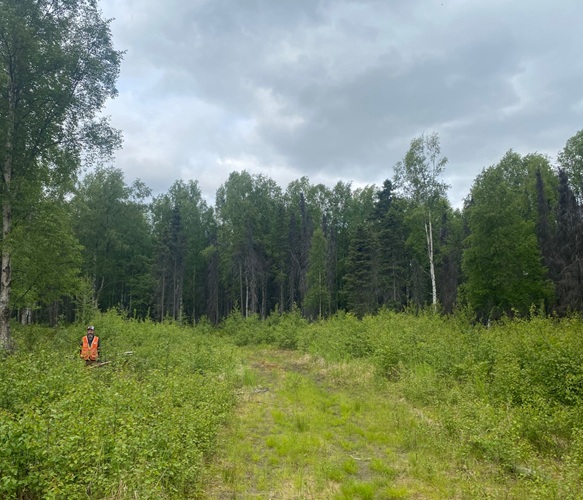
Photo 1: In Talkeetna, Alaska, a fuel break helps to reduce the spread of wildfires.
Photo courtesy of Alaska NRCS.
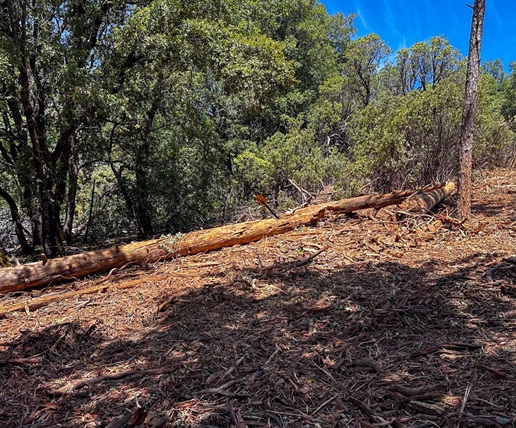
Photo 2: In Sonoma, California, USDA Forest Service employees establish a shade fuel break to reduce wildfire spread and create a cooler understory.
Photo courtesy of USDA Forest Service.