Prescribed Burning (NRCS #338)
Applicable Systems
About
Prescribed burning, or prescribed fire, is a planned, controlled fire in a predetermined area1 2. Prescribed burns can be used to manage pests and weeds, improve wildlife habitat, increase plant and seed production, enhance soil health, improve forage quality, provide site restoration, and reduce fire risk. Prescribed burns should have a clear intended purpose or goal to inform effective management and preparation. Additionally, burn frequency may vary depending on goals and vegetation.
Key aspects and considerations:
- Consider and monitor fuel type, topography of the site (slope), wind speed and direction, soil moisture, air temperature, and relative humidity to determine if environmental conditions are met to ensure a safe, effective burn. Check local conditions with NOAA Fire Weather and the National Interagency Fire Center, and test a small area at the site beforehand for insight into fire behavior.
- Notify local fire departments, neighbors, and public health and safety officials.
- Complete pre-burn preparation.
- Ensure safety requirements, equipment needs, and the needed number of trained personnel are met.
- Implement smoke management practices to reduce smoke impact.
- After burning, complete a postburn evaluation.
Benefits and Limitations
| ACRE Category | Benefits | Limitations |
|---|---|---|
| Soil Health |
|
|
| Water Management |
|
|
| Nutrient Management |
| |
| Agricultural Production |
|
|
| Biodiversity and Wildlife |
| |
| GHG Emission |
|
|
| Economics |
|
|
Impact on Agricultural Resilience
- Prescribed burns are a tool to help prevent wildfires, which are becoming more widespread and severe due to ongoing climate change.
- In forested systems, many natural communities are fire-dependent, and require prescribed burns to improve function and resiliency.
- The timing and planning of prescribed burns is likely to be impacted by shifts in spring and fall conditions, which determine burn suitability days.
Regional Applicability
- The Midwest region has been shaped by managed fires, as Indigenous communities used prescribed burns to improve agriculture, hunting, and prairie landscapes for centuries.
- In the past decade, there's been an increase in acres burned through prescribed fire across some states in the region, including Missouri, Iowa, and Kansas.
- Prescribed fire can provide a tool for managing weeds and forest understory, improving soil health, and reducing wildfire risk across cropland and forests in the Midwest.
Case Studies
- A recent project supported by the Wisconsin Sea Grant brought together 30 stakeholders and Tribal partners to illustrate the reciprocal relationship between forests and fire. Evan Larson, a Professor of Geography at University of Wisconsin-Platteville and co-lead of the project, describes the work: "Together, the memories of people and trees will help us understand the deep connections that weave the community of life found on the points now and in the past. They'll help guide us moving forward."
Resources
- Wisconsin DNR: WisBurn: Wisconsin Fire Danger and Burn Permit Restrictions
- Iowa DNR: Fire Management and Safety
- Iowa Learning Farms: Rebirth: Prescribed Burning in Iowa
- Iowa State Extension: Prescribed Fire
- Video. Iowa State Extension: How to Perform a Prescribed Burn
- USDA-NRCS: Prescribed Burning Iowa Job Sheet
- Environmental Protection Agency (EPA): Fire Management
- Video. Purdue University: Wildlife Habitat Hints: Prescribed Fire Techniques
- Video. Purdue University: Wildlife Habitat Hints: Late Growing Season Prescribed Fire
- Indiana Prescribed Fire Council: Prescribed Fire Resources
- Indiana DNR: Prescribed Burning - Indiana Habitat Management Fact Sheet
- University of Wisconsin Extension: Prescribed Fire and Wisconsin's Forests
- University of Wisconsin Extension: The Changing Climate and Wisconsin's Forests
- USDA Northern Forests Climate Hub: Effects of Fire on Ecosystem Carbon in the Midwest and Eastern United States
- US Fish and Wildlife: Prescribed Burns for Grassland Management at the Sevilleta National Wildlife Refuge
- Food and Agriculture Organization (FAO): Integrated Fire Management Voluntary Guidelines
- USDA-NRCS Conservation Practice Standard: Prescribed Burning 338
References
- USDA-NRCS (2020). Conservation Practice Standard Document, Prescribed Burning, Code 338. https://www.nrcs.usda.gov/sites/default/files/2022-09/Prescribed_Burning_338_CPS_10_2020.pdf
- USDA-NRCS (2020). Conservation Practice Overview, Prescribed Burning, Code 338. https://www.nrcs.usda.gov/sites/default/files/2022-09/Prescribed_Burning_338_Overview_10_2020.pdf
- Alcañiz, M., Outeiro, L., Francos, M., & Úbeda, X. (2018). Effects of prescribed fires on soil properties: A review. Science of the Total Environment, 613, 944-957.
- Agbeshie, A. A., Abugre, S., Atta-Darkwa, T., & Awuah, R. (2022). A review of the effects of forest fire on soil properties. Journal of Forestry Research, 33(5), 1419-1441.
- Fuhlendorf, S. D., Limb, R. F., Engle, D. M., & Miller, R. F. (2011). Assessment of prescribed fire as a conservation practice. Conservation Benefits of Rangeland Practices: Assessment, Recommendations, and Knowledge Gaps, 75-104.
- Nave, L. E., Vance, E. D., Swanston, C. W., & Curtis, P. S. (2011). Fire effects on temperate forest soil C and N storage. Ecological Applications, 21(4), 1189-1201.
- Meunier, J., & Sutheimer, C. M. (2022). Carbon Dynamics In Relation To Prescribed Fire In The Lake States.
- Pastro, L. A., Dickman, C. R., & Letnic, M. (2011). Burning for biodiversity or burning biodiversity? Prescribed burn vs. wildfire impacts on plants, lizards, and mammals. Ecological Applications, 21(8), 3238-3253.
- Wiedinmyer, C., & Hurteau, M. D. (2010). Prescribed fire as a means of reducing forest carbon emissions in the western United States. Environmental Science & Technology, 44(6), 1926-1932.
- Hurteau, M., & North, M. (2009). Fuel treatment effects on tree-based forest carbon storage and emissions under modeled wildfire scenarios. Frontiers in Ecology and the Environment, 7(8), 409-414.
- Janowiak, M., Connelly, W. J., Dante-Wood, K., Giardina, C. P., Kayler, Z., Marcinkowski, K., et al., & Buford, M. (2017). Considering forest and grassland carbon in land management. General Technical Report, Washington Office, 95.
- Keller, A. B., & Handler, S. (2024). Effects of Fire on Ecosystem Carbon in the Midwest and Eastern United States. Technology Transfer. Houghton, MI: U.S. Department of Agriculture, Northern Forests Climate Hub. 8p. https://doi.org/10.32747/2024.8633530.ch
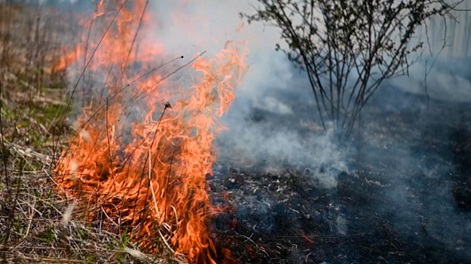
Photo 1: A properly managed prescribed burn is a tool to manage vegetation.
Photo by Brooke DeCubellis, NRCS.
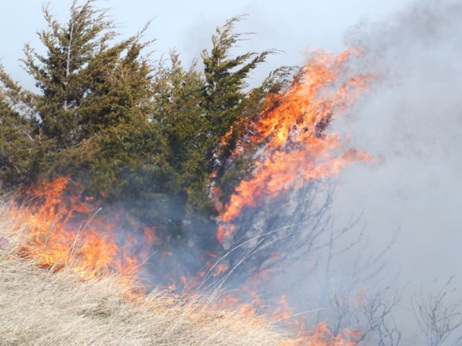
Photo 2: Prescribed burns reduce eastern red cedar encroachment in South Dakota.
Photo courtesy of South Dakota NRCS. Attribution: "2017 GrimBurn4" by USDA NRCS South Dakota, CC BY-SA 2.0.